
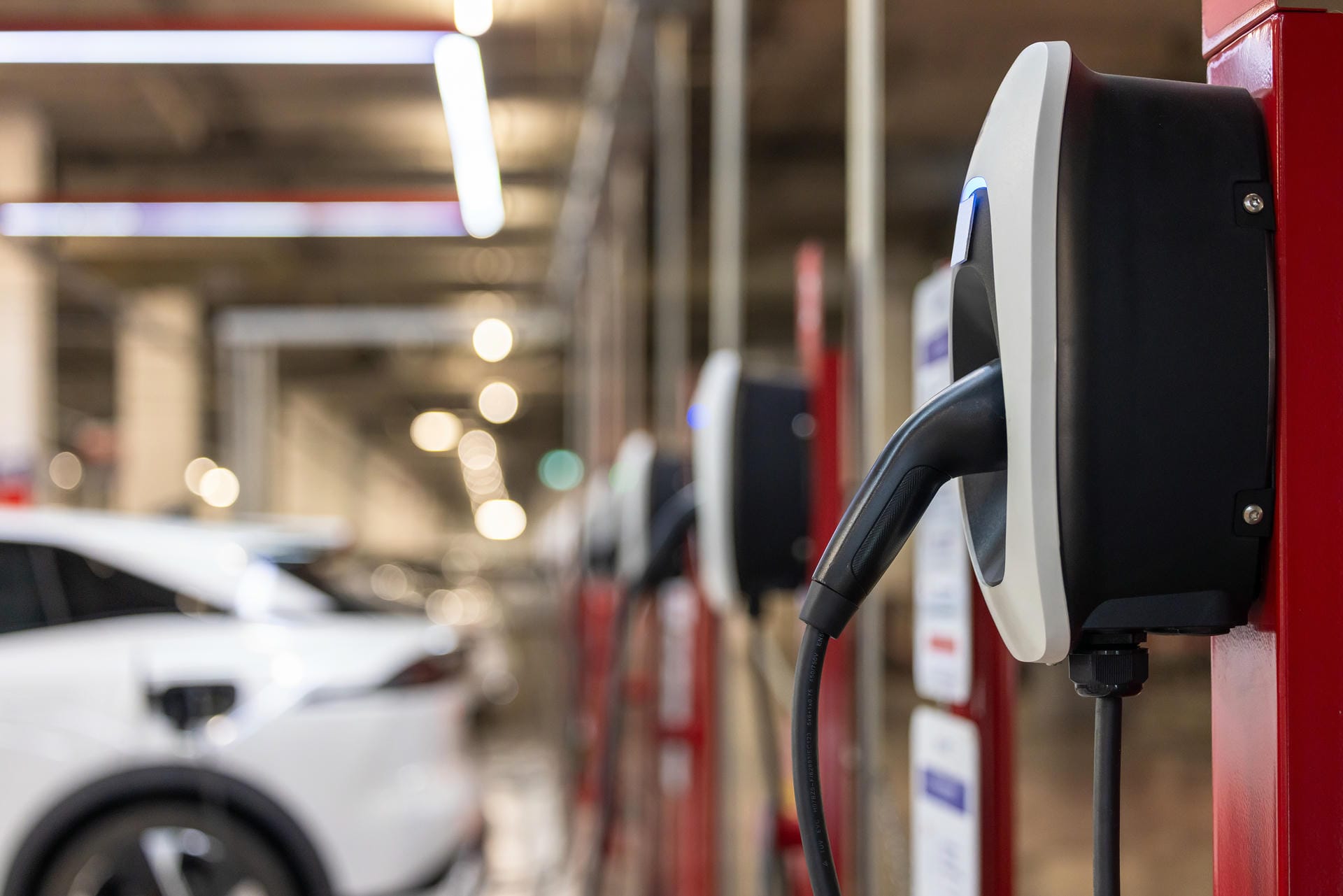
A property manager up in Westchester called me last spring after his third towing complaint in two months. Gas sedan, parked right in front of a Level 2 station, same lot every Thursday. His signs were technically up, but the wording was off and the penalty amount wasn’t posted anywhere on site. That kind of gap costs twice — once in legal exposure, once in tenant goodwill. Too address this, clear signage addressing the EV charging policy is crucial.
Multi-user lot in New York, signage treated as janitorial — that worked until about 2023. VTL 1202 isn’t toothless anymore. Once Local Law 55 landed on top the following year, the whole picture shifted from housekeeping into liability territory, and Advanced Clean Cars II kicking in this cycle just tightens the screw. Albany is banking on lot owners to absorb a fleet that’s supposed to be zero-emission by 2035. If the chargers aren’t usable because gas cars are parked in front of them, the math breaks.
The state law, short version
1202 covers two buckets of bad behavior. First one’s obvious — gas car in the charging stall, ticket, done. The second trips people up: your own EV, plugged in, fully charged, left sitting past 30 minutes without active draw. Also a violation. Even if the driver did nothing wrong beyond underestimating how fast a Level 2 tops off at 80%. The statute also demands “conspicuous and permanently installed signage,” which rules out the zip-tied laminated sheet I keep seeing on bollards in Queens.
Fines at the state level run $50 to $75 per violation depending on the municipality, with local add-ons and tow fees stacking on top. NYC and parts of Long Island have been notably aggressive about ticketing.
MUTCD, and why your handyman shouldn’t be picking out the signs
The Manual on Uniform Traffic Control Devices governs pretty much every regulatory sign you see on a public road. Its reach extends to any signage in a public right-of-way. Private lot owners aren’t technically held to MUTCD, but using it is the cleanest path to enforceability. If your signs deviate and a driver disputes a tow, the sign design itself becomes the defense.
The pieces you need:
D9-11b (or the alternate blue-and-white plug version) identifies the space as an EV charging station. Standard size at a parking facility is 12 by 12 inches.
On-road the dimensions scale up — 24×24, or 30×30 if it’s highway-adjacent. The R7-11 is completely different. Red, black and white colors, 12 by 18, wording set as “No Parking Except for Electric Vehicle Charging.” Sign placement is almost as important as what’s printed on it. Right beside the space. Driver’s-seat eye level. Too low and it gets missed, too high and it reads decorative.
A plaque underneath with your penalty amount, enforcement hours, and the 30-minute active-charging rule is the piece most lots skip. Don’t skip it. NY courts have tossed tickets where the penalty wasn’t posted at the site.
One note about green paint. Developers keep wanting to stripe the stalls green. FHWA doesn’t love this, because green pavement markings are under interim approval specifically for bike lanes. White striping plus proper signage is the safe path.
Local Law 55 of 2024
Local Law 55 of 2024 was extremely impactful in NYC. Any commercial building clearing 11 parking spots — which is most mid-sized office buildings, not exactly a high bar — is on the hook for 20% EV-ready wiring. Half of that, meaning 10% of total spots, needs a live Level 2 or DCFC the day the doors open. Not “planned.” Operational. Local Law 130 of 2013 already required pre-installed capacity, so 55 is really the buildout requirement layered on top. One DCFC counts toward the requirement for ten Level 2s, which is how a few developers have been threading the needle on tighter sites.
Outside NYC, Assembly Bill 622 covers publicly funded construction of parking facilities with 50+ spaces — minimum 40 amps and 208 volts per designated space. Mixed-use project with any state or city funding? Assume it hits you.
Writing a parking policy that survives the first complaint
Signage is the visible layer. Your actual policy — the document a tenant or a contested driver sees when they push back — is where most lots I audit have holes.
A few things to spell out, posted at the lot office or included in lease documents:
Hours of enforcement. “24/7” is a policy. “Charging only during business hours, overnight open to tenants” is also a policy. Both are fine. Silence is not.
The 30-minute rule, worded the way the statute has it. If a Tesla sits plugged in for six hours after finishing its charge, most drivers assume they’re fine. They’re not, assuming your signs say so.
Towing authorization. Who calls it in, which tow company, where the vehicle goes. VTL 1202 permits removal but the paper trail needs to exist.
Fee transparency. Collecting session fees? Those need disclosure at the charger, per the public-charger disclosure norms being tightened under NEVI right now.
What changes in 2026
Senate Bill S801 passed last year amending Chapter 643 of 2024 — it directs the Uniform Fire Prevention and Building Code Council to bake EV infrastructure standards into the next Energy Code cycle after December 2026. Translation: the floor on EV-ready requirements in new construction is going up again, likely within 18 months. S7283-A is also in play, offering a power-based alternative to per-space charger counts, which would help smaller lots if it clears committee.
NYSERDA’s Charge Ready NY program is still paying $4,000 per Level 2 port, with an extra $500 in designated disadvantaged communities. Those rebates make the striping and signage cost look negligible.
The part most lot owners miss
Your EV charging signage policy isn’t a compliance checkbox. It’s what a hearing officer reads when someone contests a $200 ticket. Sign wording, mounting height, size, and penalty disclosure all lined up with MUTCD and VTL 1202 — the ticket holds and the tow sticks. One of them off — the ticket usually dies and the driver walks.
Worth getting right the first time.

 4770 White Plains Road, Bronx, NY
 info@efficiencyplus.co
 929.429.3720