
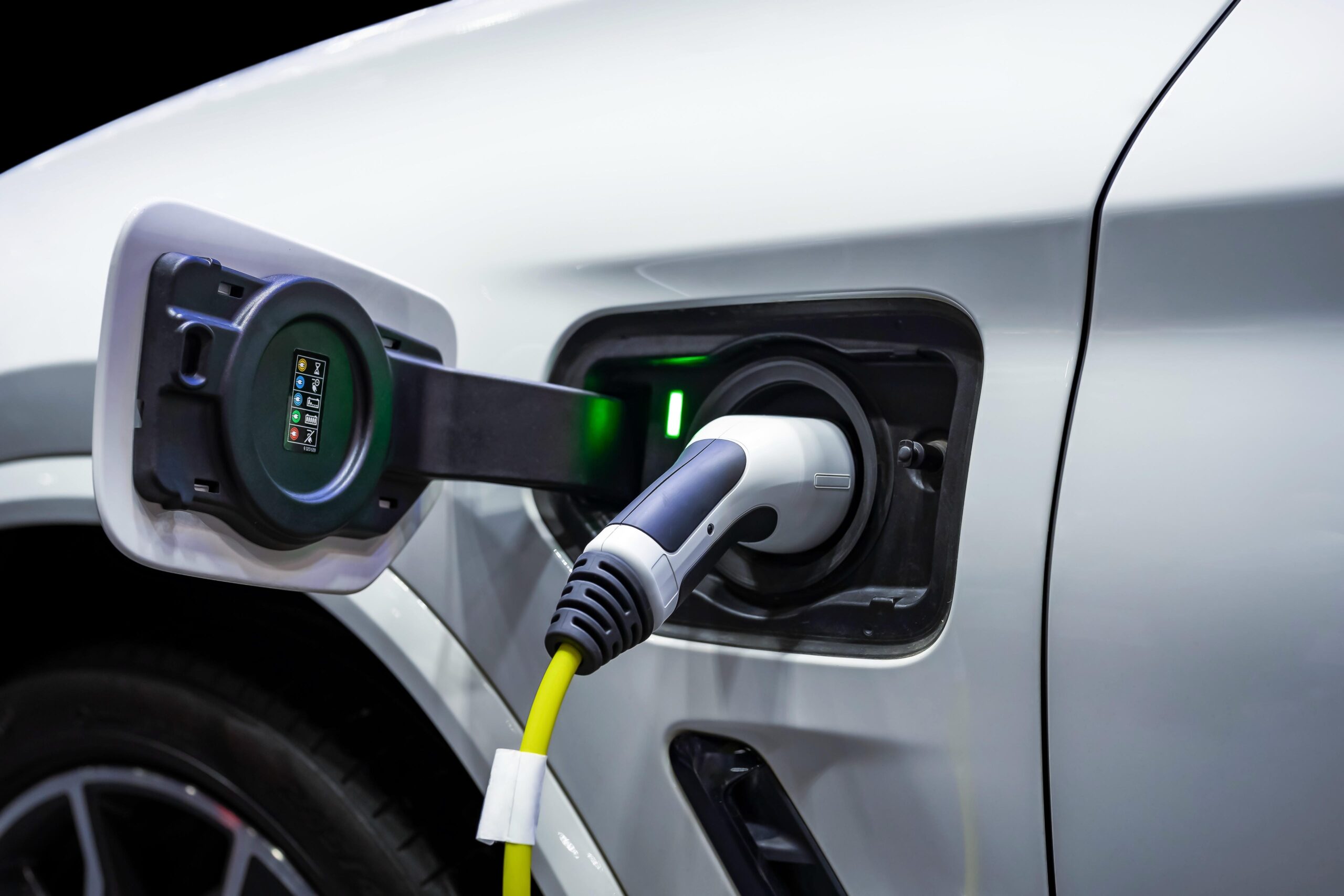
A lot of building owners think a commercial ev charger installation is basically a shopping list: pick chargers, mount them, done. Then the first quote shows up and everyone starts doing math on a napkin.
Here’s what’s really happening: you’re funding an electrical construction job first, and a charging amenity second. The chargers are the visible part. The expensive part is getting safe, code-compliant power to the parking spaces.
Budget it in two buckets:
- EVSE (the stuff drivers see): the charging stations, pedestals or wall mounts, cables, basic networking hardware.
- Make-ready (the stuff you don’t see): panels and breakers, feeders, conduit, trenching/core drilling, concrete restoration, protection, commissioning, and whatever upgrades are needed so the system doesn’t trip, overheat, or fail inspection.
Most projects don’t go over budget because the charger model changed. They go over budget because the site needed more make-ready than anyone wanted to admit up front.
1) Power and make-ready infrastructure
First question: where is the spare electrical capacity coming from?
Sometimes it’s a straightforward new breaker and feeder. Other times you’re paying for a panel upgrade, new switchgear, a service upgrade, or utility-side work. In New York City, designs and permits are judged under the current rulebook—the 2025 NYC Electrical Code took full effect on December 21, 2025.
This is also where incentives can change the math. Con Edison’s PowerReady Light-Duty Vehicle Program says incentives can offset up to 100% of electric infrastructure costs associated with installing light-duty chargers (depending on eligibility). Joint Utilities of New York similarly notes non-residential sites may be eligible for up to 100% of electric infrastructure costs for new charging stations.
2) Engineering and layout (the part that prevents rework)
Owners pay for:
- site survey + load calculations
- drawings (single-line, circuiting, mounting, protection)
- a layout that works in real life (cable reach, turning radius, clearances)
If you expect growth, you may also pay now for “future-proofing” (spare conduit, reserved panel space) so you don’t trench twice.
3) Permits, inspections, and schedule risk
You’re paying for filings, plan review, inspections, and closeout. That’s normal. What’s not normal is trying to start construction and “deal with permits later.”
Con Edison’s NYC permitting guidance for charging infrastructure is blunt: applying for New York City Department of Buildings electrical permits late increases the likelihood of delays, and electrical permits are required for EVSE installations.
And if your property is a licensed parking garage or open lot, NYC’s requirements are getting clearer. Local Law 55 of 2024 sets EVSE requirements for parking garages and open lots with 10+ spaces. For facilities that are DCWP-licensed, the law points to January 1, 2035 as the deadline to have at least 20% of spaces equipped with Level 2 charging, and 40% capable of supporting Level 2.
For unlicensed facilities, the schedule is set by DOB rule — and the law says DOB must promulgate the implementing rules no later than January 1, 2027.
4) Civil work: trenching, concrete, and distance
This is the “construction” part of the invoice:
- saw-cutting/trenching and patching
- core drilling through walls or slabs
- pads, pedestals, bollards, wheel stops
- striping and signage
Distance from the electrical room to the stalls is a sneaky multiplier. A national lab analysis on DC fast charger installs found distance can add about $200 per foot, hardscape factors can add ~21% to expected installation costs, and permits can add ~5–10%. Level 2 is usually less intense than DC fast, but the same physics apply.
5) The EVSE hardware: Level 2 vs DC fast isn’t a minor choice
The charger drives everything else: power needs, utility upgrades, and long-term operating cost.
For guardrails, national data helps. A U.S. DOE/AFDC report compiling non-residential EVSE costs lists ballpark installation ranges of roughly $600–$12,700 for Level 2 and $4,000–$51,000 for DC fast charging (site conditions drive the spread). AFDC also notes average public/workplace Level 2 installation costs around $2,500 per connector, with DC fast installation often $20,000–$60,000 per connector depending on charger power and site specifics.
6) Networking, payment, and ongoing operations
Commercial sites usually want networked chargers, so owners pay for:
- network subscriptions/management dashboards
- payment processing (if you bill drivers)
- cellular/data plans (if not hardwired)
- maintenance and support
NY also has an equipment requirement worth knowing: the Joint Utilities Make-Ready program notes that, effective June 26, 2023, EVSE sold in New York must meet ENERGY STAR EVSE efficiency standards (ENERGY STAR V1.0 or V1.2).
One more “ongoing” cost that gets missed: maintenance. AFDC’s operations guidance suggests planning for average maintenance costs up to about $400 per charger per year, and notes extended warranties for DC fast chargers can cost over $800 per charger per year (figures vary by station type and contract).
7) Electricity costs: if you go fast, you’re buying peaks
For Level 2, the electric bill is usually predictable. For DC fast, it can get weird. National Renewable Energy Laboratory research on DC fast charging economics highlights demand charges and retail electricity prices as major factors affecting DCFC station profitability.
The U.S. Department of Energy notes that managed charging can limit a charger’s output or shift when a vehicle charges to reduce demand charges and take advantage of time-of-use pricing.
Translation: you’re not only paying to add electrical capacity — you’re often paying for the controls that stop your meter from spiking at the worst possible moment (and turning one bad 15-minute window into a higher bill all month).
8) Incentives and tax credits (helpful, but paperwork-heavy)
Two levers tend to matter most in New York right now:
- State rebates for Level 2 ports, like NYSERDA Charge Ready NY 2.0 (commonly structured as $3,000 per port, and $4,000 per port in a Disadvantaged Community, depending on site type and program rules).
- Make-ready / infrastructure support, where the “help” is often aimed at the electrical work and not the shiny charger hardware.
Federal incentives can help too, but they’re picky. The IRS’s Section 30C credit only applies if the chargers are installed in an eligible census tract (low-income or non-urban). If you qualify, it’s 6% of your cost—or 30% if the project meets prevailing wage and apprenticeship rules—capped at $100,000 per charger (per item of property).
A simple owner checklist for quotes
When you request pricing for commercial ev charger installation, ask for the scope in plain English. You want these line items spelled out:
- existing capacity + load calculations
- what make-ready includes (panels, feeders, conduit, switchgear, service work)
- civil scope (trenching length and restoration approach)
- EVSE model/port count + warranty
- network/software fees (and what happens if you cancel)
- permits/inspections and who owns closeout
- commissioning + turnover (as-builts, labeling, basic training)
- an ops plan (response time, parts, maintenance)
If you do one thing before signing: confirm the power plan and measure the distance. Those two decide whether this is a clean install—or an expensive surprise.
Where EfficiencyPlus comes in
EfficiencyPlus helps New York building owners scope, permit, and build EV charging so it passes inspection and works reliably from day one.

 4770 White Plains Road, Bronx, NY
 info@efficiencyplus.co
 929.429.3720