
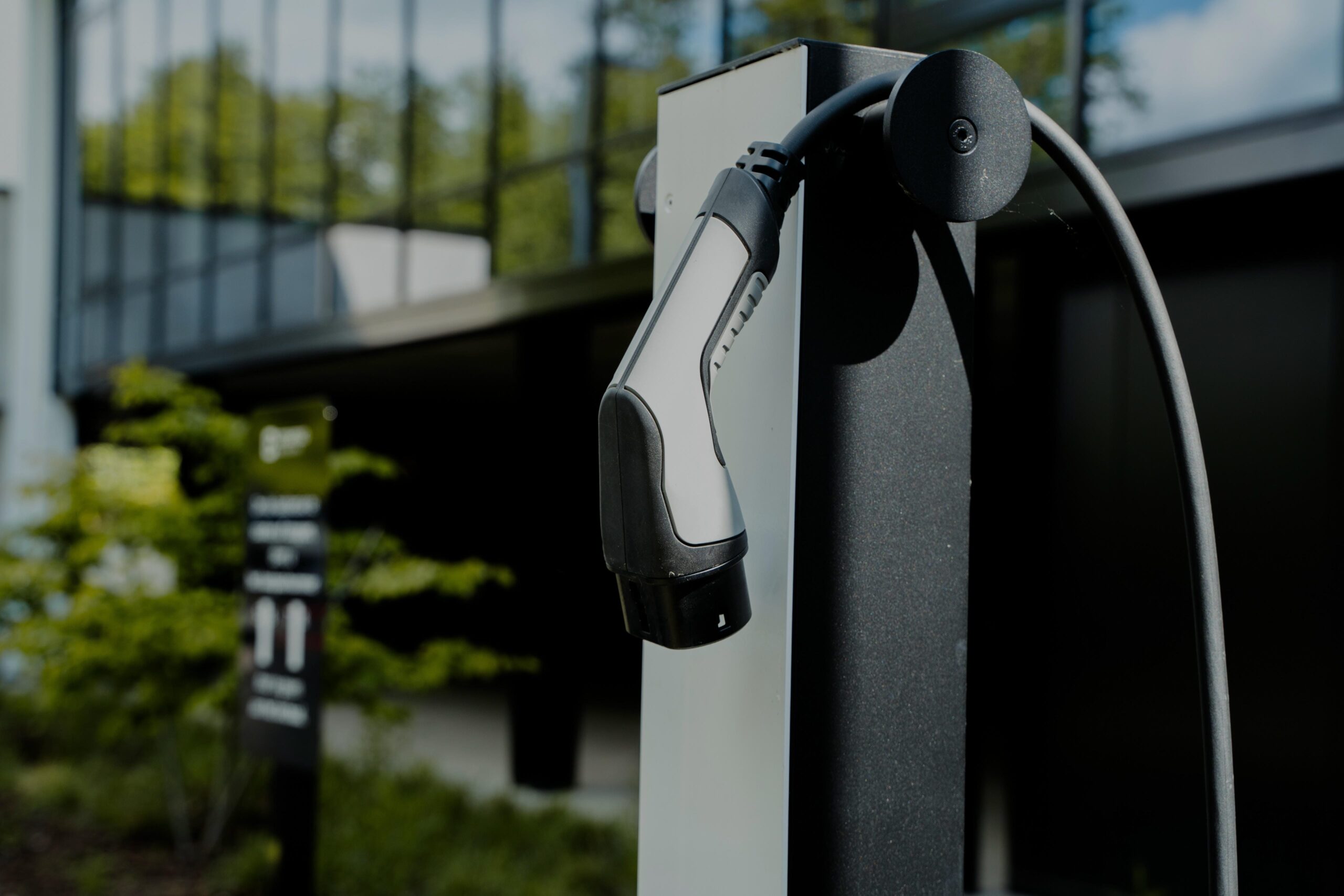
A hospital parking lot is its own little ecosystem. The rhythms are off compared with an office park, a shopping center, or even a college campus. Cars are coming and going at shift change, outpatient arrivals bunch up at certain hours, family members stay longer than expected, and the fleet side may be moving in the background the whole time. That is why hospital EV charging stations cannot be planned like a generic workplace amenity. In New York, the current incentive programs also nudge owners in that direction: NYSERDA’s Charge Ready NY 2.0 treats inpatient hospitals as eligible workplace sites, focuses on Level 2 charging where drivers are parked for multiple hours, and—importantly—pays less for spaces reserved to an individual driver or fleet vehicle than for general workplace charging. (NYSERDA)
That last part matters more than people think. On paper, it is tempting to say, “We’ll put chargers everywhere and let the site figure itself out.” In real life, that can turn into a traffic problem wearing a sustainability sticker. Staff parking, patient and visitor parking, and fleet charging should be treated as three separate operating zones from the start. NYSERDA’s current rebate structure reflects that split: workplaces, multifamily properties, hotels, and motels can receive $3,000 per charging port, with another $1,000 per port possible in disadvantaged communities, while fleet-reserved or individually assigned spaces are only eligible for $1,000 per port. As of February 2026, the program had another $15 million added, bringing the total budget to $28 million. (NYSERDA)
For employee parking, the biggest issue is usually not speed. It is dwell time. A nurse on a 12-hour shift, a lab tech working evenings, and an administrator parked all day do not need DC fast charging just because the phrase sounds more advanced. Level 2 is often the better fit for hospital staff parking because the cars sit long enough for a meaningful charge without the higher hardware cost and electrical burden that comes with fast charging. NYSERDA describes Level 2 as ideal for sites where drivers park for multiple hours, and its installer guidance says those stations typically provide about 20 to 25 miles of range per hour. In the New York City metro area, NYSERDA says installation costs often land in the $2,000 to $10,000 per-port range, which is another reason hospitals should be choosy about where faster charging is actually worth it. (NYSERDA)
So the employee area should do the heavy lifting. Not the front door. Not the best five spaces on campus. The practical move is usually a larger bank of Level 2 chargers in staff parking, with sensible controls so one driver does not camp on a charger for an extra four hours after the battery is already fine. The Department of Energy’s workplace charging guidance gets into this in a surprisingly plainspoken way: if an employer charges a fee, it recommends pricing slightly above local residential electricity rates because that can reduce charger congestion without turning the station into a penalty box. That advice fits hospitals pretty well. Employee charging should be available, but it also has to behave. (Alternative Fuels Data Center)
Patient and visitor charging is a different animal. People coming for imaging, dialysis, outpatient procedures, wound care, or a specialist visit are not operating on the leisurely timetable of a suburban office worker. Some will be there two hours. Some will stay all day. Some are already stressed before they even pull into the lot. That means patient-facing chargers should be easy to find, simple to use, and placed with accessibility and traffic flow in mind—not wedged into an awkward corner because there happened to be conduit nearby. The U.S. Access Board says entities covered by the ADA or ABA must provide chargers that are accessible and usable by people with disabilities, and it also notes that accessible EV charging spaces do not count toward the facility’s required minimum number of standard accessible parking spaces. In a hospital setting, that distinction is not technical trivia. It changes striping, routing, signage, and how many spaces you really need. (Access Board)
There is also the fleet side, which is where too many otherwise decent plans start to wobble. Hospital campuses may have security vehicles, maintenance trucks, shuttle vans, transport units, outreach vehicles, and support fleets that follow very different schedules from employee cars. Trying to blend all of that into one shared charging area usually looks efficient only on a spreadsheet. New York’s incentive structure gives owners a reason to think more carefully. The Joint Utilities’ light-duty Make-Ready Program says non-residential sites may be eligible for up to 100% of electric infrastructure costs. For medium- and heavy-duty projects, the Joint Utilities pilot allows up to 90% of utility-side infrastructure costs and up to 50% of customer-side costs for qualifying projects, and the pilot was authorized to continue beyond December 31, 2025. In other words, there is real money available for infrastructure, but the fleet plan has to be treated as a fleet plan, not as overflow parking with plugs. (Joint Utilities of New York)
This is where phased design usually beats the grand gesture. A hospital does not necessarily need thirty or forty live ports on day one. It may need conduit, switchgear planning, spare capacity in the right location, networked hardware that can scale, and a clear internal policy for who gets what. There is a difference. The Joint Utilities program has current technical requirements tied to project commitment dates, including newer standards for L2 equipment committed on or after June 1, 2025, and NYSERDA requires approved equipment and network participation for Charge Ready NY 2.0 projects. Owners who buy the cheapest hardware they can find and hope to sort it out later are setting themselves up for headaches that facilities teams will remember very clearly. (Joint Utilities of New York)
The electrical side needs the same level of realism. Hospitals are not casual buildings. They already carry critical loads, backup power considerations, and a long list of systems that no one wants competing for attention during an avoidable peak. Con Edison’s SmartCharge Tech program is built around that problem. It offers incentives for load-management and related technologies at commercial EV charging sites, including workplace and fleet locations, and requires participation in SmartCharge Commercial or the EV Phase-In Rate program. That is worth paying attention to. A hospital charging project that ignores load management may still get built, sure, but it can become more expensive to operate than it needed to be. (Con Edison)
Then there is the tax-credit layer, which is still relevant in 2026 and should not be left to the last minute. New York’s tax credit is the lesser of $5,000 or 50% of the cost for qualifying alternative-fuel or EV recharging property used 50% or more in a New York trade or business. On the federal side, the IRS says qualified business or organizational property placed in service from January 1, 2023 through June 30, 2026 generally gets a 6% credit up to $100,000 per item, or 30% if prevailing wage and apprenticeship requirements are met. That deadline is not abstract anymore. It is close enough that planning delays start to have real consequences. (NY Taxation & Finance)
The cleaner way to think about hospital EV charging stations is this: the charger itself is not the project. The operating plan is the project. The split between staff, patient access, and fleet is the project. The electrical backbone is the project. The rules are the project. Once those pieces are right, the hardware choice gets easier, and the incentives actually line up with how the campus works. If those pieces are ignored, the site may still end up with chargers, but it will also end up with confusion, complaints, and one more facility system people work around instead of relying on.
That is a lousy outcome for any property. At a hospital, where parking is already tight and nobody showing up there is looking for extra friction, it is even worse. Better to design it like a hospital from the beginning. That sounds almost too obvious, but plenty of projects miss it anyway.

 4770 White Plains Road, Bronx, NY
 info@efficiencyplus.co
 929.429.3720